Digital Human
Why Choose Digital Artist: Advantages of Digital Artists
With the rapid development of CG technology, artificial intelligence and virtual content generation, coupled with the overall improvement of contemporary audience’s aesthetic level and the increasingly stringent requirements for idols and artists’ ‘persona quality’, the digital human industry has experienced explosive growth in the past five years. From YouTube, Tiktok to Red book, we can see more and more digital artists: they endorse international brands, star in creative adverts, sing and dance on virtual stages, and even have their own ‘meta-universe life’, interacting with their fans in real time.
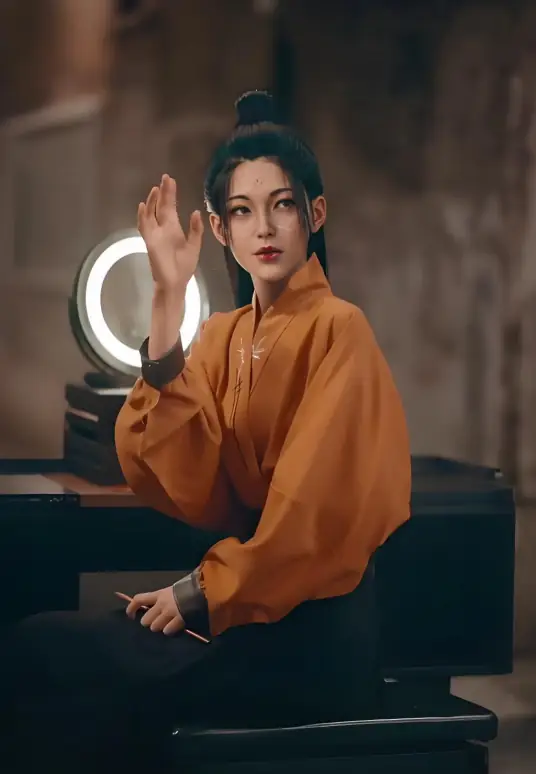
Compared to traditional real artists, virtual digital people have a number of natural advantages. First of all, it is highly adaptable and flexible: they are not subject to the reality of time, space, geography, body and other restrictions, can be in any stage in the world, ‘synchronous’ appear; they can be based on the current popular trends, aesthetic preferences, audience profile for rapid iteration and adjustment, to achieve the real “thousands of faces! ‘They can make rapid iterations and adjustments according to current fashion trends, aesthetic preferences, and audience profiles, so that they can truly have ’a thousand faces and a thousand interpretations”. From styling to character setting, from voice to performance style, digital artists can be completely tailored to the needs of creators and the market, to the maximum extent possible to match the ‘ideal idol’ image in the audience’s imagination.
Secondly, digital artists do not have the physical, psychological and social problems that real artists have to face. They don’t need to rest, they won’t be late, they won’t be in scandal, they won’t go on strike or ‘collapse’. **They don’t have to worry about public crises caused by human weaknesses, or the negative emotions and public opinion that can arise from fan culture. ** For brands and producers, this undoubtedly greatly reduces operational risks and artiste management costs, but also brings the possibility of more stable and controllable long-term image planning.
However, digital people are not ‘omnipotent’. After all, they are not real human beings, but ‘anthropomorphic images’ created by a group of creators. How to make this character truly ‘alive’ is the core challenge of every digital human project. That is to say, whether a digital person can ‘get out of the circle’ is not only whether the appearance is eye-catching enough, whether the technology is advanced enough, but also whether the character can inspire the audience’s emotional resonance….
Whether his ‘persona’ is interesting and can stand?
Is his ‘emotion’ real and believable, and can it even trigger the audience’s self-projection?
Can he transcend the ‘Valley of Horror effect’ and let the audience feel a certain ‘temperature’ similar to real-life interaction?
All of these questions ultimately boil down to one point: whether or not a digital artiste is established, its success or failure depends almost entirely on the artistic expression and characterisation skills of the creator behind it. In other words, every successful digital person is in fact a ‘virtual extension’ of the creator’s own aesthetics, emotions and expression – in a sense, it is the creator’s “doppelganger” or ‘mirror’. In a sense, it is the creator’s ‘doppelganger’ or ‘projection in the mirror’.
Because of this, the core advantage of digital artists does not lie solely in the technology itself, but in the enormous creative potential released by the combination of technology and art. It provides contemporary content creators with a new stage and a new way to build their identity, and is redefining the concept of ‘artiste’ itself.
How to make a digital person: the way to make a digital person
There are various ways to make a digital person on the market, from the traditional CG modelling process to the rise of AIGC technology, each path has its own applicable scenarios and technical characteristics. However, the real realisation of high-precision, high-fidelity digital human production process is still a systematic project with a high threshold. Especially in projects that require a high degree of detail reproduction, natural and smooth movements, and close to the texture of real people, the rough generation method is often difficult to handle.
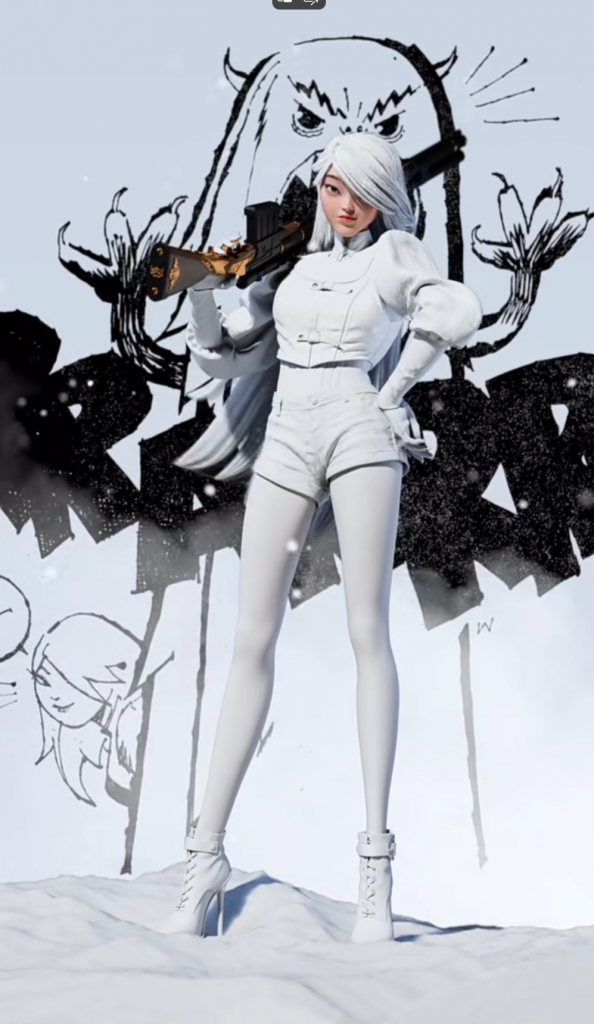
Overview of mainstream production methods
The more traditional high-end CG digital human usually adopts the process of ZBrush → Maya → Unreal/Unity, which is a set of highly detailed but time-consuming production paths for film and TV or game-level character production, with each step of modelling, binding, texturing, and animation requiring a long time of polishing by a professional team. Its disadvantages are long development cycle, high requirements for equipment and manpower, and high cost, so it is generally used for large commercial projects with sufficient budget.
Meanwhile, in recent years, with the rapid development of AIGC (AI-generated content), there are more and more ‘lightweight’ digital people directly through the AI image generation or video-driven generation of the way to create fast, suitable for short videos, live stand-ins and other light content scenes. The advantages of this type of method are fast speed, low threshold, and low cost of trial and error, but there are still some limitations in terms of precision, detail control, and action customisation.
My Production Experience: CC Process and Blender Universal Human Process
In my personal practice, I am more familiar with and actually use two kinds of digital human production processes, which have their own advantages and disadvantages and are suitable for different creative purposes and content styles.
1. Character Creator (CC) workflow
This workflow relies on Reallusion’s Character Creator software, which uses its built-in character templates and generation system to quickly create digital characters. The creation process includes character base generation, additional texture mapping and adjustments, and movement, which relies on CC’s extensive library of movements.
Pros:
Character creation is fast and the barrier to entry is low;
Rich action libraries cover most of the basic needs such as daily actions, dialogues and performances;
It is easy to link with iClone and other animation software, and can be quickly used for animation short film production.
Disadvantages:
The bone binding system is relatively closed, which is not conducive to custom adjustment;
Once encountered the library does not have the action, you need to manually K frame, but CC in the K frame animation editing freedom is not as professional animation tools, low efficiency;
The style is biased towards universal templating, not suitable for creating characters with strong personal style.
2. Blender + Universal Human workflow (my most used process)
This is my most used process, the core is based on Chris Jones’s Universal Human binding system (Blender environment), which is a set of high degree of freedom, high fidelity of the open source human body system, is very suitable for making personalised and artistic style digital human characters. artistic style of digital human characters.
The workflow includes:
Manual sculpting and modelling of the face and body using the base model;
Overlaying real human skin texture maps, then modifying and touching up using a thick paint style to give the character certain 2D visual characteristics (similar to the texture in Battle of Two Cities);
Using the Hair Generator plugin to generate custom hair styles and Hair Flow to simulate hair physics;
The final result is a ‘semi-realistic’ digital human character with realistic skin texture and pore detail, as well as an artistic aesthetic.
Benefits:
High degree of art freedom, with complete control over the character’s appearance and style;
Well-built binding system, especially for hands (Chris Jones’ weights and bones are very tight);
Unique visual style, allowing for ‘otherworldly’ character designs that fall somewhere between realism and fantasy.
Weaknesses:
There is no built-in motion library, all movements must be manually K-framed or use external motion data (e.g. Mocap), which puts a higher demand on the creator’s animation skills and time management;
Motion development is time-consuming, which is not conducive to rapid iteration of content, especially when time is tight or the team size is small, the production pressure is higher.
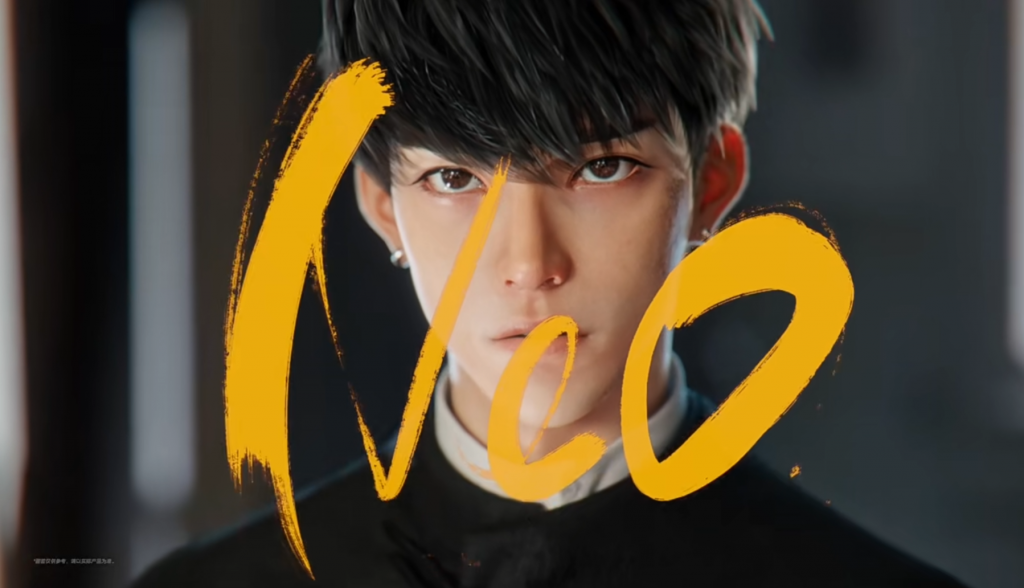
Neo is produced by this flow
Scripts and animations: what content is suitable for digital people?
In the current field of digital human content creation, we can clearly see a trend: the majority of active digital human figures are often born in the context of brand partnerships. As a result, the settings, functions and content types of these characters are clearly commercially orientated from the outset. In other words, they are characters born for brands, serving marketing goals and creating output around products in the long term.
For example, NEO, a digital person created by Zero 2 Studio, is a product of cooperation with VIVO mobile phones. NEO is a futuristic warrior with a high-tech combat system, and his core equipment is naturally the latest digital products from VIVO. In each video, he faces the challenge of various ‘city monsters’, and the key props he uses to defeat his opponents are often the new features of the current generation of VIVO devices – such as Super Night Scene Mode, image processing chips, or high-definition sound systems. The storyline is a short animation with a fighting style. The plot is a battle-style animated skit, but it’s essentially creative advertising content that is extremely centred around the product’s selling points.
Similarly, there’s Yum Ziya, a digital persona created by hip toy brand Underverse. Ziya’s persona is that of an urban demon-hunting warrior, with a style that leans towards a futuristic fusion of street trends, focusing on visual impact and youth culture. His videos are usually in the form of ‘vlogs’, with a series of demon hunter stories linked together with the brand’s latest trendy apparel or products. While maintaining a sense of enjoyment and rhythm, the brand exposure and style unity is also very high, which can be regarded as an exemplary case of the application of digital people in the field of trendy brands.
Another widely known digital personality, Liu Yuxi, represents a more ‘content-orientated’ approach to digital personals. Rather than being exclusive to a brand, Liu is more of a virtual KOL (key opinion leader) with her own persona and operational logic. Her content style focuses on short dramas, combining elements of modern urban life, beauty and fantasy to form a distinctive ‘urban fantasy short drama style’. Beauty products and skincare concepts are interspersed in the drama, and the advertising implantation is more natural, and the view is closer to an uploader recommending products in her own content, rather than the traditional ‘brand direct investment’ model. This mode is relatively more able to stimulate the audience’s emotional resonance, but also allows digital people to have more diversified content possibilities.
In summary, the current development path of digital people in the field of script and animation can be summarised into three categories:
Functional endorsement type (e.g. NEO): with equipment performance display as the core, serving the brand marketing objectives;
Visual trend type (e.g. Yum Ziya): emphasising the sense of style, the combination of fighting and trendy play elements, highlighting visual aesthetics and brand tone;
Content-driven (e.g. Yoo Night Hee): with an original plot as the core, the character setting drives the diversity of content, and the implanted ads are more flexible and natural.
These cases show the potential of digital people in brand communication, visual narrative, content innovation and other dimensions, and also provide valuable reference and inspiration for more ‘non-commercial customised’ digital people.
My project: my digital man series
This is my first original content creation, not a commercial or branding project, so I have more freedom in setting and expression. In this project, I wanted to create a digital persona that is not orientated towards a utilitarian purpose – not a functional display tool or a branded symbol, but just a ‘person’. An ordinary but real character, a person who can live with us, but with a slight storytelling aspect.
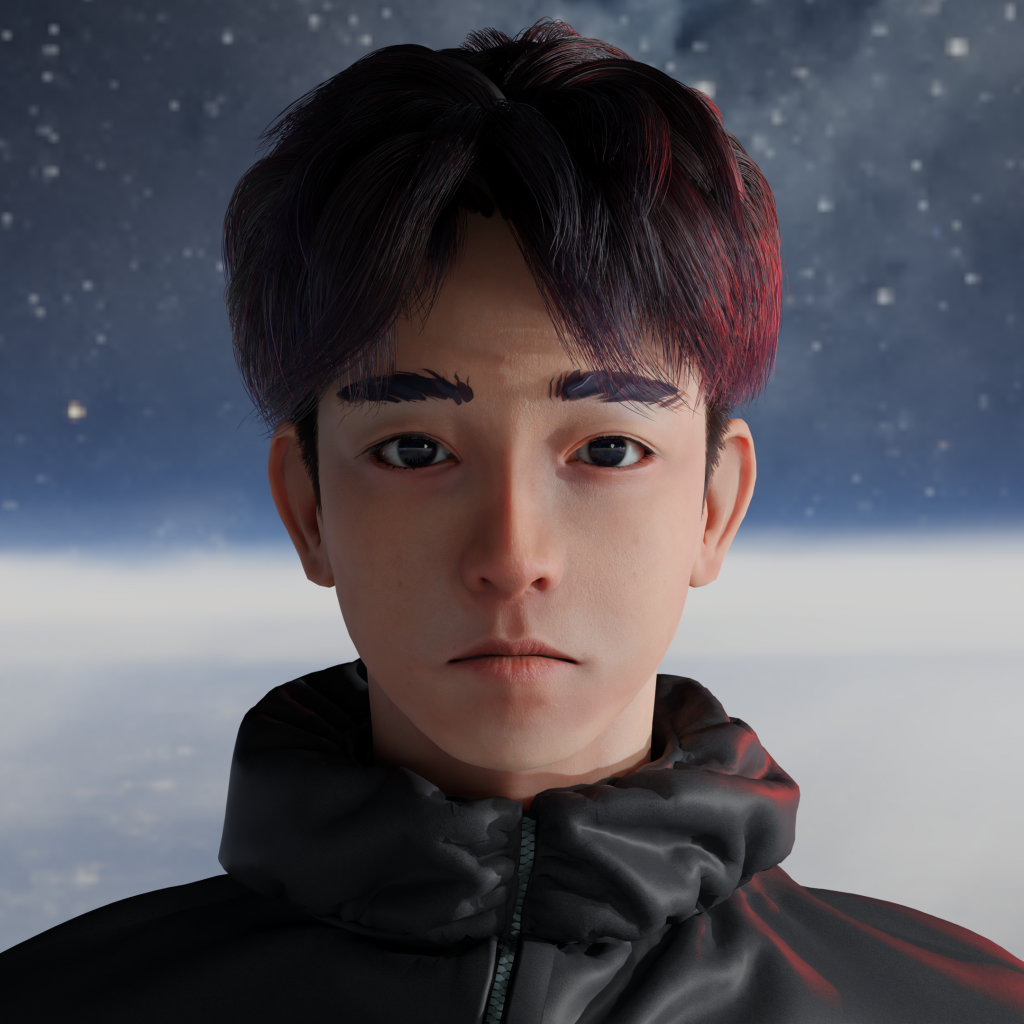
I named him Cloux, a student going through the everyday life of a young person: going to school, communicating with friends, facing the worries and choices of growing up. I envisioned his story to be not grandiose, but real and moving. In the midst of his seemingly ordinary daily life, Cloux experiences small events that are slightly unusual – or fantastical, or sensual, and perhaps a little philosophical. These subtle variations are the focus of what I want to explore through this character: even an ordinary life has its moments of light and reflection.
The first short film in this series will be centred around ‘Cloux’s school routine’. On the surface, it is an ordinary record of school life, but in it, I will lay some not-so-normal plot clues that will open up the space for the whole story world to develop, Cloux will come across some mysterious details or unexpected scenes in the campus, and these ‘abnormalities’ are what he, as a digital person, is looking for. “Cloux encounters mysterious details or unexpected scenes on campus, which are potential clues to his existence as a digital being.
At the same time, the series also includes ‘collaborative short films’ that tie in with real-life themes. One of the short films is set in a seaside location where Cloux is invited to participate in a public service film on marine environmental management. Although this is a collaborative piece of content, it is not an isolated piece in the overall narrative structure, but part of the story line. In the process, Cloux will face nature for the first time, feel the impact of human behaviour on the environment, and begin to reflect on his own meaning and responsibility as a human being. Not only does this drive the character’s growth, but it also gives him a connection to the real world.
Ultimately, I plan to create a complete and in-depth conclusion that will serve as the culmination and emotional closure of the entire Digital Man series. This story will look back at Cloux’s experiences along the way, and reveal the worldview and identity he has developed through these moments – not only as a digital person, but also as a ‘character’ that carries thoughts and resonance.
So, what kind of content is my digital person suitable for?
Compared to the more mature, commercially orientated digital human operation models mentioned above, my digital human project starts from a completely different point of view: it is not customised for a brand, and does not exist for the purpose of demonstrating functionality, implanting a product, or for some kind of commercial metrics. It’s more like an ‘original character’ with its own worldview and developmental clues, like a protagonist in a fictional world, who is gradually understood and liked by the audience in animation and storytelling.
Therefore, I think my digital persona is more suitable for a ‘content-driven’ path, but unlike Liu Yexi’s KOL model, which favours advertising integration, my character will be closer to the direction of an ‘original virtual character IP’. He is not an anchor, nor is he a voice tool for the brand, but a ‘person’ who can tell stories. His content does not revolve around products or collaborations, but around the character himself: his daily life, his thoughts, the people and events he encounters, and how he deals with the slightly unusual experiences of ordinary life.
My digital man Cloux, although he is also in the form of sketches and animation, I want his style to be closer to the narrative style of ‘urban daily life + light fantasy’ than to the genre of fighting or hunting demons – similar to a growing up diary of a young man, only this young man is a young man who is growing up in the city. It’s like a handbook of a young man growing up in the city, only this young man is a digital person. He may encounter mysterious events on campus, reflect on the relationship between man and nature during a trip, or just sit quietly on a park bench, conversing with strangers and triggering some kind of subtle emotional resonance.
Such types of content formats might include:
Short animated story episodes (one daily episode with a ‘light fantasy’ theme).
Analogue vlogs (Cloux the Digital Man narrating a day in the life).
Short films with real-life themes (e.g., environmental protection, social pressure, AI-human boundaries, etc.).
Light experiential content that interacts with the viewer (the viewer decides what Cloux chooses to do).
More importantly, I want this character to be ‘real’, not a tool, not a spokesperson, but a ‘digital friend’ that the audience can grow to love and even empathise with.
In the future, if there are opportunities to collaborate with brands, I would prefer to keep the integrity of the character and integrate it, rather than ‘modifying the character’ to fit the brand. In other words: collaboration is a way to enter the world of Cloux’s stories, rather than the stories serving the collaboration.
Leave a Reply